
OEM Integration:
About the System
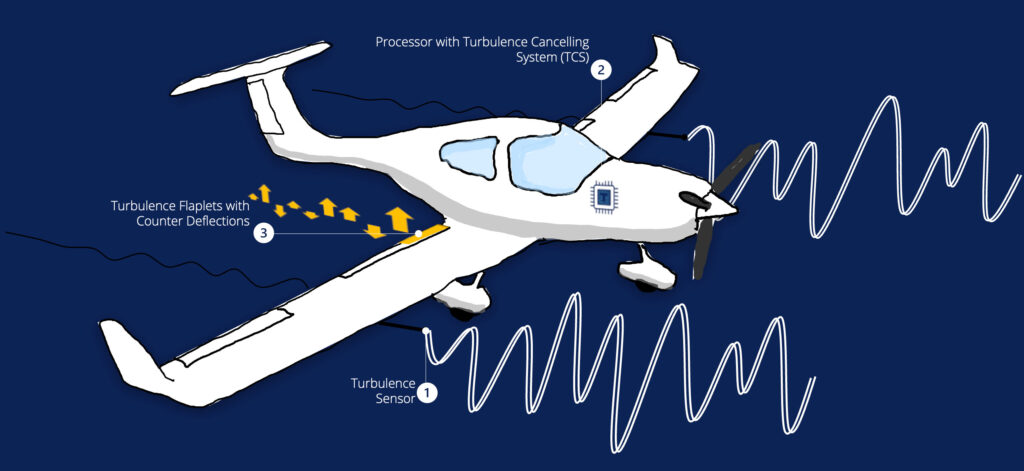
Turbulence Cancelling System – The Turbulence Cancelling System (TCS), developed by Turbulence Solutions FlexCo, is designed to enhance passenger comfort in turbulent conditions. In addition, it contributes to reduced structural and fatigue loads on the aircraft and supports lower pilot workload.
TCS is not required for continued safe flight and landing and can be activated or deactivated by the pilot at any time within a defined operating envelope. The system does not extend the aircraft’s certified flight envelope or alter G-load limitations approved by the Type Certificate (TC) holder. Its aerodynamic influence is intentionally limited by design.
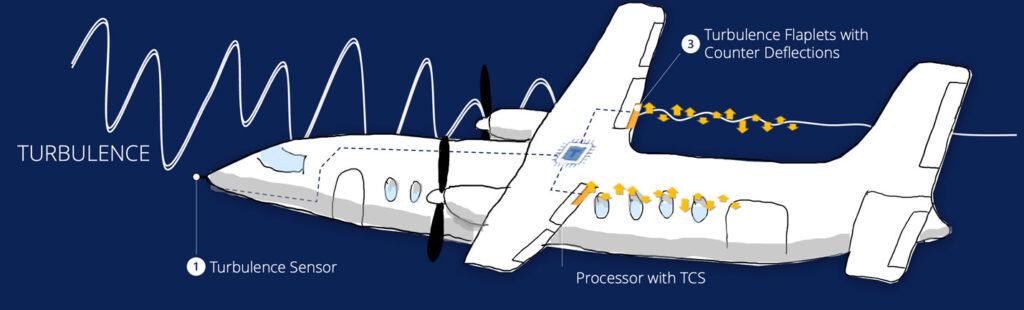
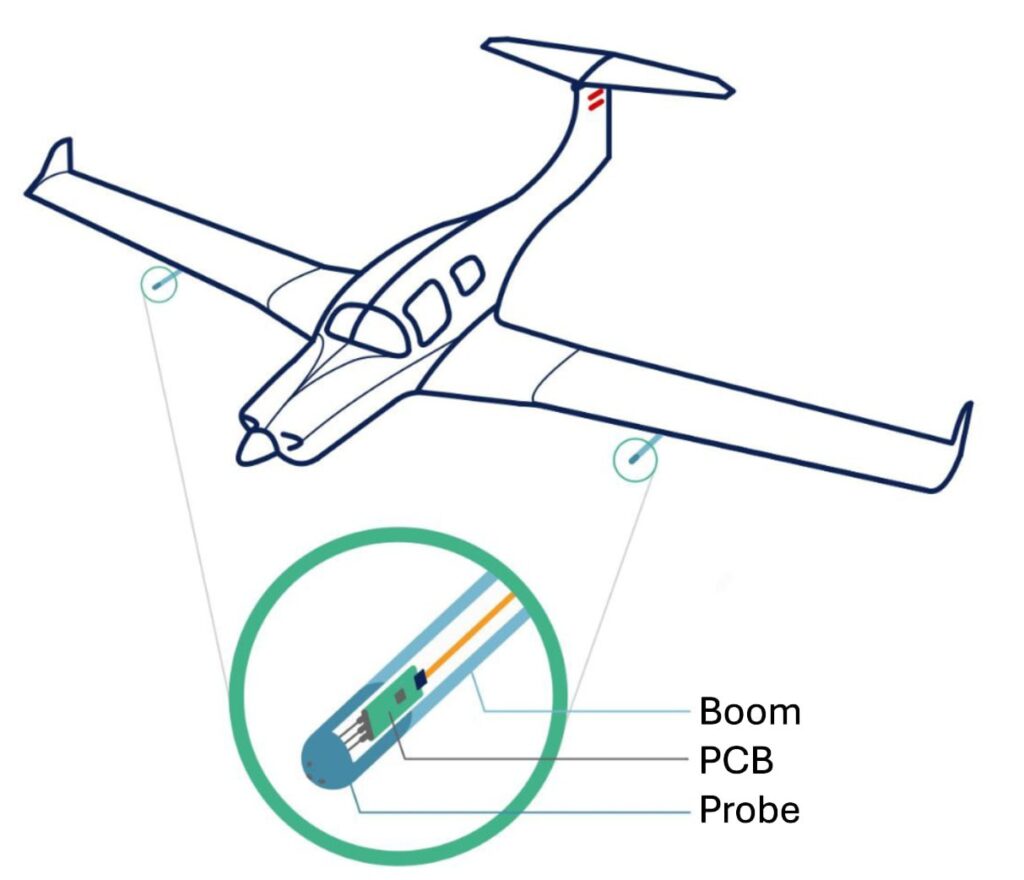
Turbulence Sensing is achieved with multi-hole pressure probes extended a few dozen of centimetres ahead of the leading edge of the wings (for nose-mounted engine), mounted on booms. The location of the pressure probe is determined following initial analysis of the system’s performance for the aircraft considering aircraft design.
Depending on design and requirements, pressure sensors can be equipped with heating elements to allow for TCS function in known icing conditions.
The Flaplet Control Unit (FCU) is the core element of the Turbulence Cancelling System. The FCU is responsible for identifying the activation envelope, receiving processed pressure data from the Turbulence Sensor, interacting with the pilot interface, computing the necessary flaplet actuation, commanding the actuation and logging operations
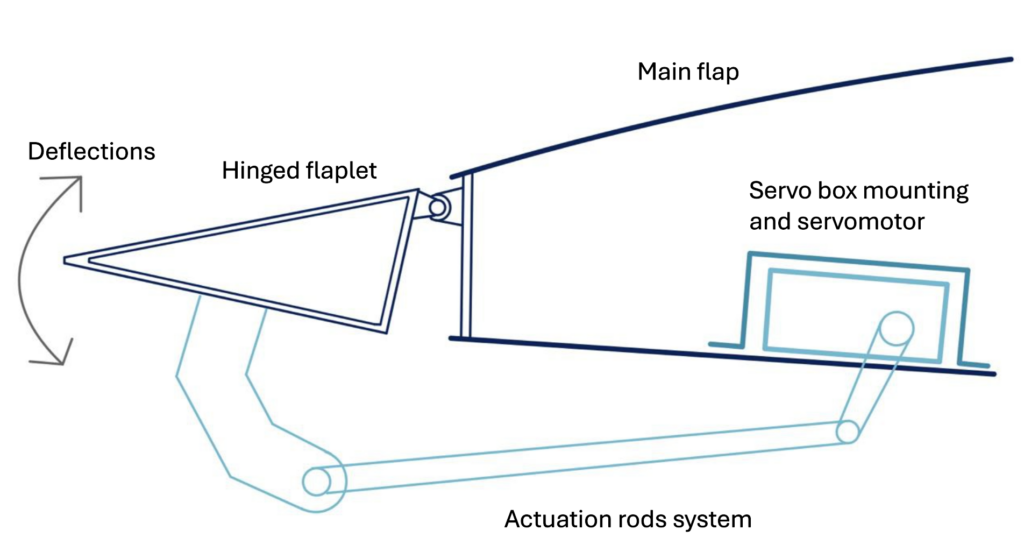
The Turbulence Flaplet is a small section of the flap, with the actuation system fully contained inside the main flap, making the modified flap equipped with Turbulence Flaplets a whole separate component. The Turbulence Flaplet remains a conventionally hinged control surface actuated symmetrically with dynamic actuators controlled by the FCU
OEM Integration:
CS-23/part 23 – Small Aircraft
Turbulence highly affects all kinds of aircraft, whether business, recreational, family or adventure. Our mission is to render turbulence for general aviation a problem of the past and we are committed to go the extra mile to bring Turbulence Cancelling on your aircraft.
The Turbulence Cancelling System integration project on a CS-23 certified aircraft is a highly certification-inclined process; hence system and integration requirements are derived directly from actions relevant to safety assessment (ARP 4761, ED-135, ASTM 3230).
No-hazard approach
Turbulence Cancelling System is a comfort feature, it is not required for continuous flight and landing. Unlike load alleviation systems, TCS does not expand aircraft structural or flight envelope and all system states including failure conditions allow for safe flight and landing.
Configuration design
The Turbulence Cancelling System configuration consists of the Turbulence Sensor location, Turbulence Flaplet size and location, Turbulence Flaplet actuation rates and limits and forecasted g-load suppression. The configuration is designed with the no-hazard approach from the very beginning, limiting the size of the control surfaces to remove any possibility of harming the aircraft.
Project Initialization
Configuration Development
Detailed Design
Manufacturing
System Testing and Installation
Ground Tests & Flight Tests
Certified Series Production
Contact us to receive more detailed information about the Turbulence Cancelling System integration project for your aircraft
Timeframe
The approximate timeframe of the project varies depending on the certification needs. Development flights under a Permit to Fly project shall take from six to ten months, whereas the timeframe of development of an STC or TC change highly depends on aircraft complexity and system performance objectives.
Prototype Aircraft
Despite project duration, for development purposes it is only required to ground an aircraft in the final stages of the project for installation, ground and flight tests. A duration of approximately one to three months is considered.
Integration project tailored to YOUR aircraft
Interested parties are welcome to contact us and we will be happy to provide more information on the TCS integration project for your aircraft and your needs. We are open to cooperate and see great value in strategic partnerships.
OEM Integration:
Ultralight aircraft
Ultralight aircraft are particularly sensitive to turbulence. Low wing loading and stiff wing structures transmit disturbances directly to the aircraft and occupants.
Our roots are in the ultralight segment: initial flight tests in 2022 were conducted on a homebuilt MC-30. This foundation enables continuous, disciplined progress with a clear focus on quality, safety, and performance.
Shark-600
High-performance ultralight aircraft across the market demonstrate impressive capabilities in speed, handling, and efficiency. As part of its step-by step approach, Turbulence Solutions collaborates with manufacturers to integrate TCS into selected platforms. One result is the first certified ultralight aircraft equipped with TCS, developed in cooperation with Shark Aero and now in commercial operation worldwide.
Learn more in the Demo Aircraft section about our demonstrator, the Turbulence Cancelled Shark 600 “Steady Eddy”.
Ultralight Integration
Turbulence Solutions holds the expertise to accomplish integration and certification of the Turbulence Cancelling System on ultralight aircraft. Whether it is composite aircraft, or a time-proven aluminum/wooden structure, fast cruiser or unhurried leisure aircraft, system integration and certification is a straightforward process. The integration project is conducted jointly with the respective aircraft designer/manufacturer, contact us to find out more about project requirements.
Certification
The pilot ultralight integration project of the Turbulence Cancelling System has brought a proven certification framework removing any “unknowns” within the process, Turbulence Solutions has built competences and resources capable of undertaking any future integration and certification campaigns in partnership with ultralight OEMs.
Market-Proven Success
The Turbulence Cancelling System can be provided as standard or as an option on the aircraft for the buyer to choose. With a sales debut in 2024, Turbulence Cancelling System has proven to not only boost visibility but increase aircraft sales. Integrating the system on your aircraft is an effective way of distinguishing yourself form the competition with a goal to provide enhanced customer experience and turbulence-free flights.
Integration project tailored to YOUR aircraft
Interested parties are welcome to contact us and we will be happy to provide more information on the TCS integration project for your aircraft and your needs. We are open to cooperate and see great value in strategic partnerships.
OEM Integration:
Advanced Air Mobility / eVTOL
Turbulence Cancelling System does not rely on primary aircraft control surfaces and uses a small secondary control surfaces – Turbulence Flaplets for providing the counter deflections mitigating turbulence effects. The system does not try to counter any inputs of the pilot or autopilot and is fully compatible with any fly-by-wire systems. The integration project follows very closely integration processes of other aircraft types with slight changes due to less conventional layout of eVTOL aircraft. The Turbulence Cancelling System follows a strict no-hazard approach, meaning that any conditions and states of the system allow for safe flight and landing. The system simply does not have any ability to hazardously impact the aircraft.
The system configuration is carefully developed for the specific aircraft, dynamic flight model, Turbulence Flaplet sizes and actuation rates are tailored for the project and performance objectives. This ensures safety and compliance with certification specifications and allow to reach performance
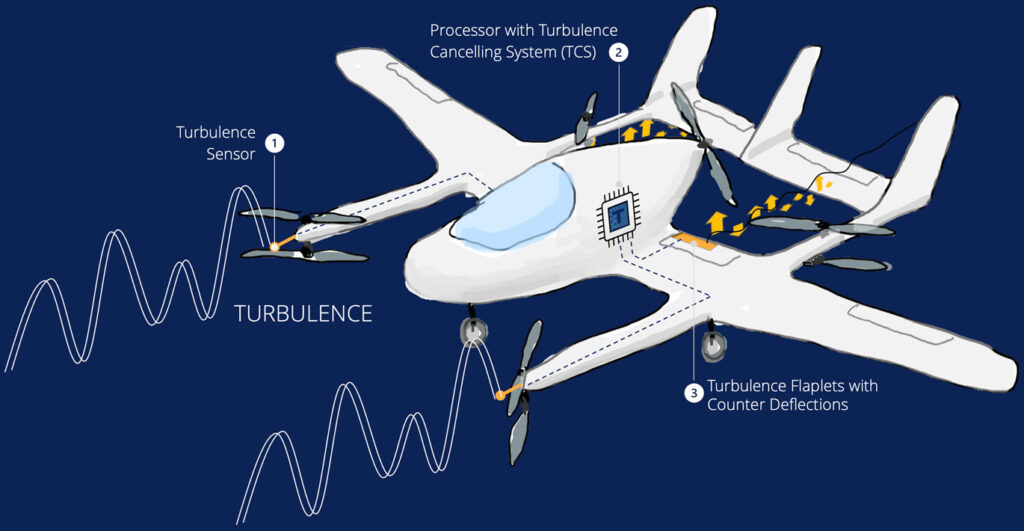
Advanced Air Mobility (AAM) has been gaining a lot of momentum lately with many companies promising a future of air transportation. Newly developed FAA part22 MOSAIC certification should allow to see an increase in development and certification of eVTOL systems. High interest lies in application of AAM as air taxis, or private air transport for urban areas. Urban areas are known for increased levels of turbulence due to infrastructure, especially in areas with high-rise buildings.
Turbulence Cancelling System is a flight proven technology for all fixed wing aircraft, hence it’s applicability for eVTOLs with wing-borne flight capability in undeniable.
Why this matters?
Turbulence Cancelling System is an active feedforward system that suppresses turbulence induced acceleration of aircraft. By rejecting any turbulence that is thrown at the aircraft, our system makes flights and turbulence-free, as if there was no turbulence to begin with.
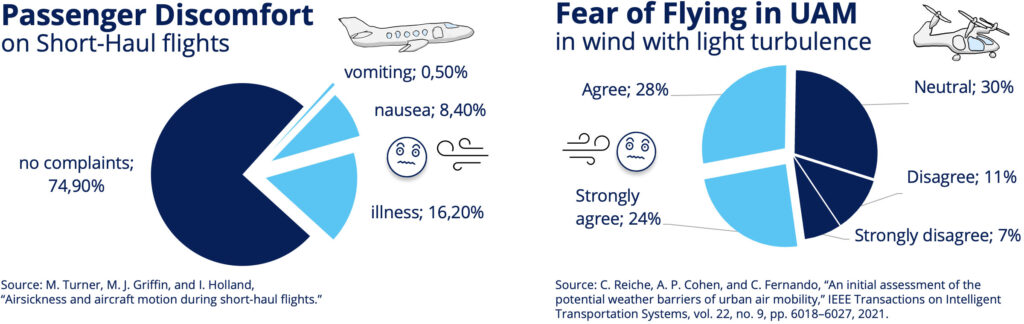
Survey show that weather conditions are serious concern raising fear in passengers for Urban Air Mobility (UAM). We believe that the Turbulence Cancelling System is a technology-enabler for AAM, as it will allow for comfortable and safe flight in densely populated urban areas where turbulence is at its highest. If passengers will be “thrown around” the cabin during their short trip, there is a high chance they will not fly again.
Integration project tailored to YOUR eVTOL
Interested parties are welcome to contact us and we will be happy to provide more information on the TCS integration project for your aircraft and your needs. We are open to cooperate and see great value in strategic partnerships.